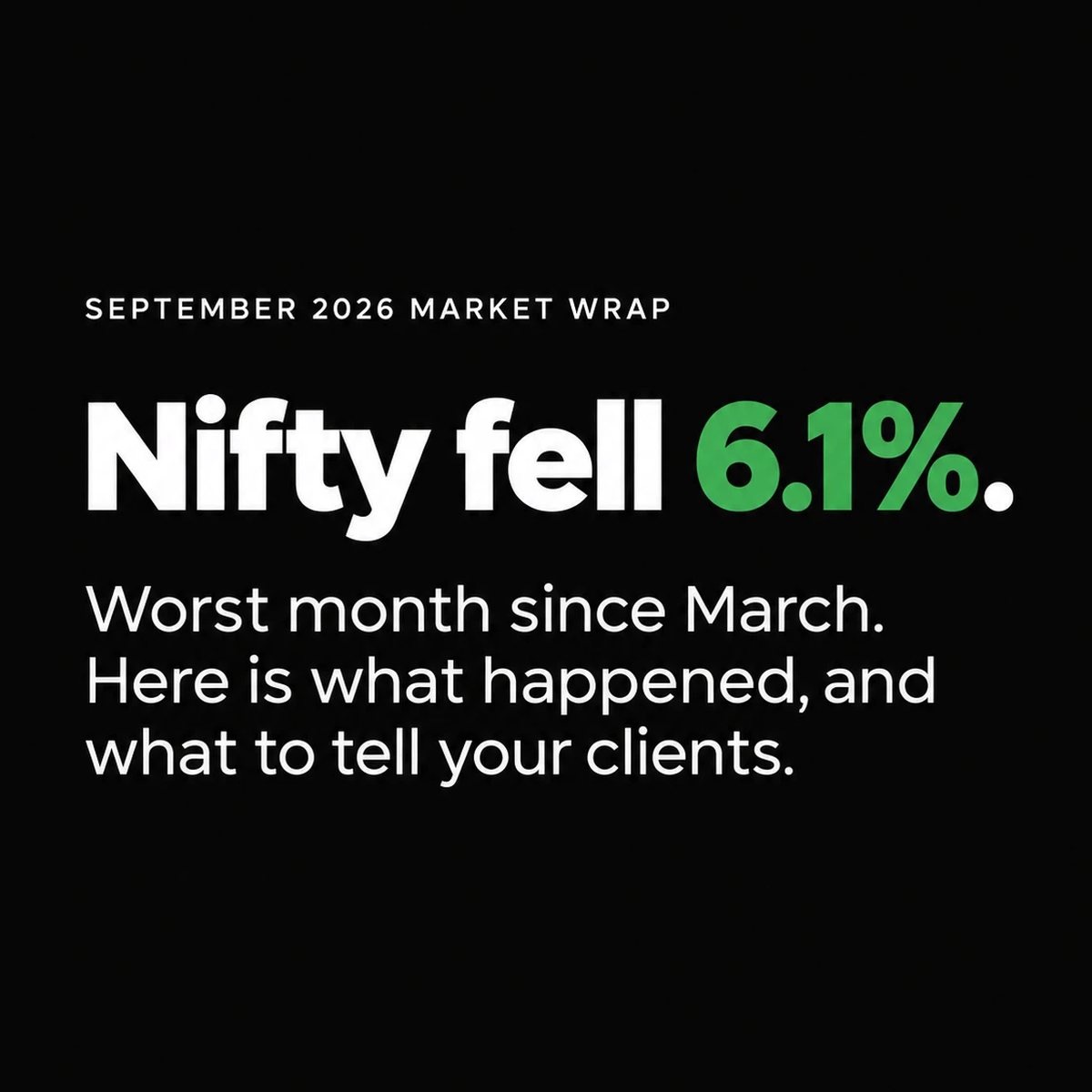
The Nifty 50 fell 6.1% in September, its second monthly decline in a row and its weakest month since March. Two events outside India explain most of the move. The US Federal Reserve raised rates on 16 September, and Brent crude climbed back above $100 a barrel. Foreign investors sold Indian equities through the month while domestic institutions kept buying, and the indices still closed lower.
The scoreboard
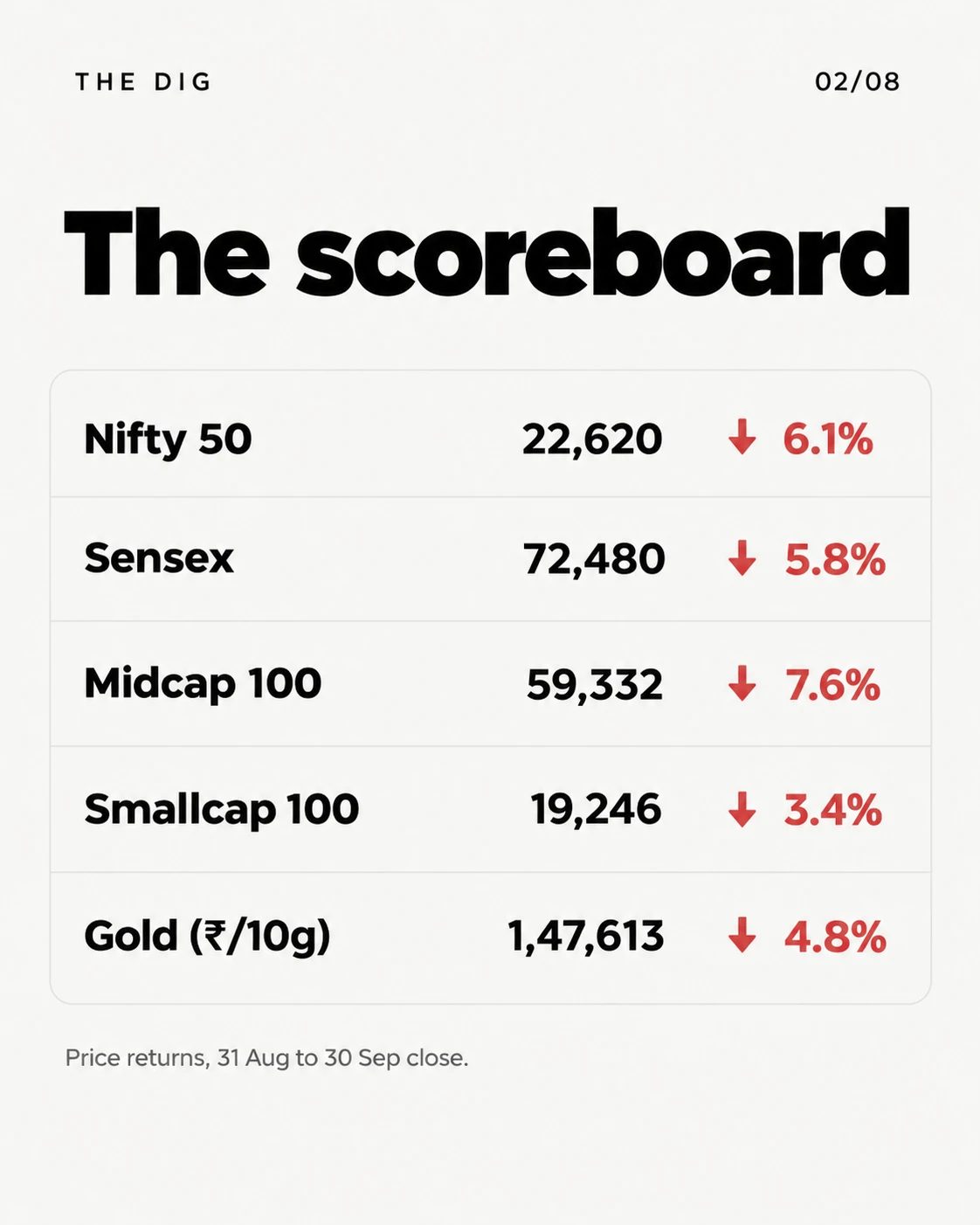
| Asset | 30 Sep level | September return |
|---|---|---|
| Nifty 50 | 22,620.45 | down 6.1% |
| Sensex | 72,480.29 | down 5.8% |
| Nifty Midcap 100 | 59,332.05 | down 7.6% |
| Nifty Smallcap 100 | 19,245.70 | down 3.4% |
| Gold (INR, per 10g) | ₹1,47,613 | down 4.8% |
Index figures are price returns from the 31 August close to the 30 September close. Gold is the World Gold Council's INR series, based on Bloomberg data.
Midcaps fell the most of the four indices, while smallcaps fell about half as much as the Nifty. By 25 September the benchmarks had declined for seven weeks in a row, which Reuters described as the longest losing run since 2020.
The Fed and crude
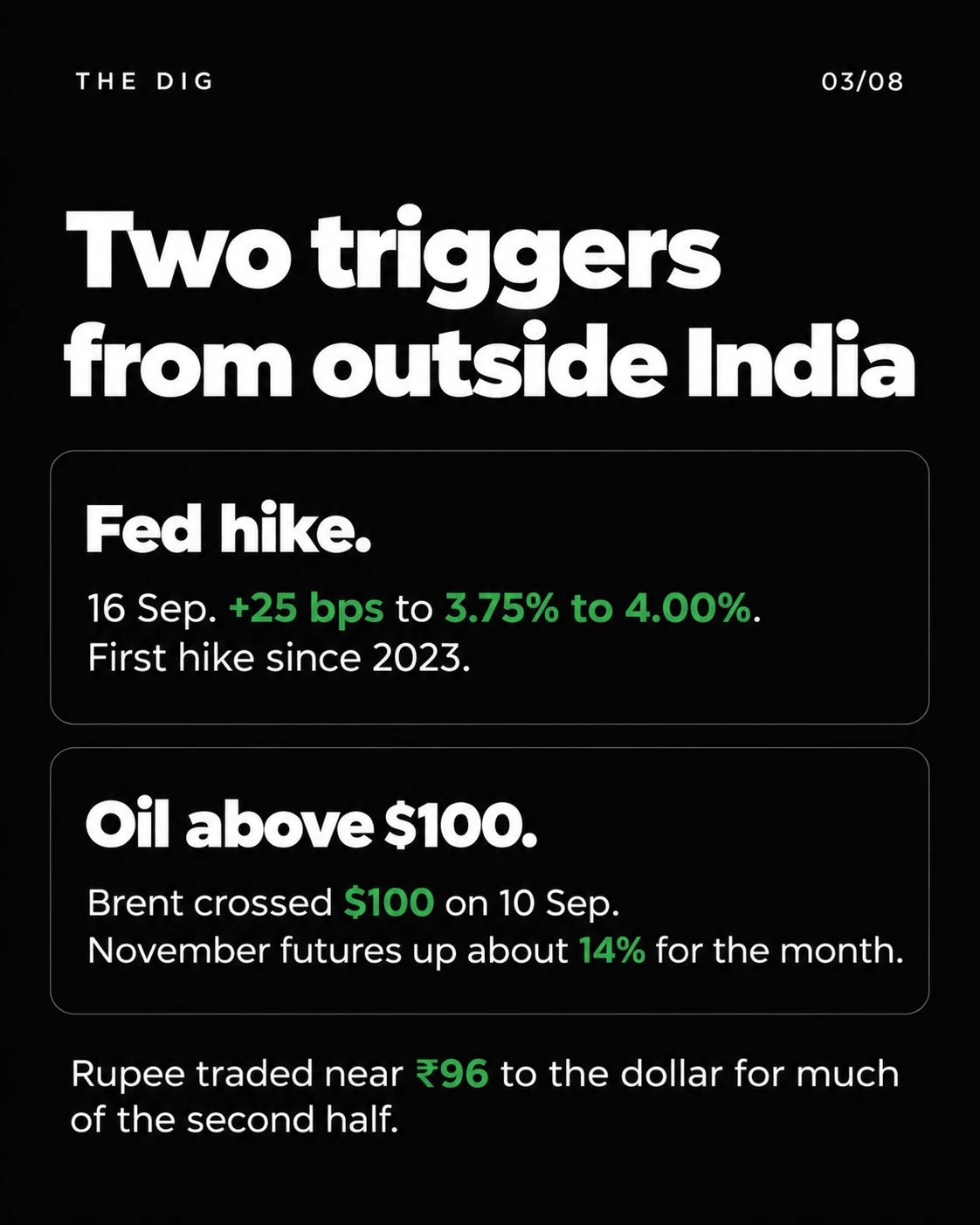
On 16 September the Fed raised its policy rate by 25 basis points to a range of 3.75% to 4.00%. All 12 voting members backed the move. It was the Fed's first increase since 2023, and its projections left room for one more hike this year. US 10 year yields had already risen above 5% before the meeting.
When US bond yields rise, emerging market assets look less attractive to some global investors. Yields are only one input, though. The dollar, the outlook for the rupee, valuations and earnings all affect where foreign money goes.
Oil rose at the same time. Brent started September in the mid $90s. Early in the month Iran claimed control over shipping through the Strait of Hormuz, which the US rejected. Brent crossed $100 on 10 September for the first time since late July and traded above $107 by mid month. The November Brent futures contract ended September about 14% higher, although other Brent series show a smaller gain.
India imports most of its oil, so higher crude raises the import bill and puts pressure on the rupee. The rupee traded near ₹96 to the dollar for much of the second half of the month.
India also hosted the 18th BRICS Summit in New Delhi on 12 and 13 September. Members adopted the New Delhi Declaration by consensus.
Who sold and who bought
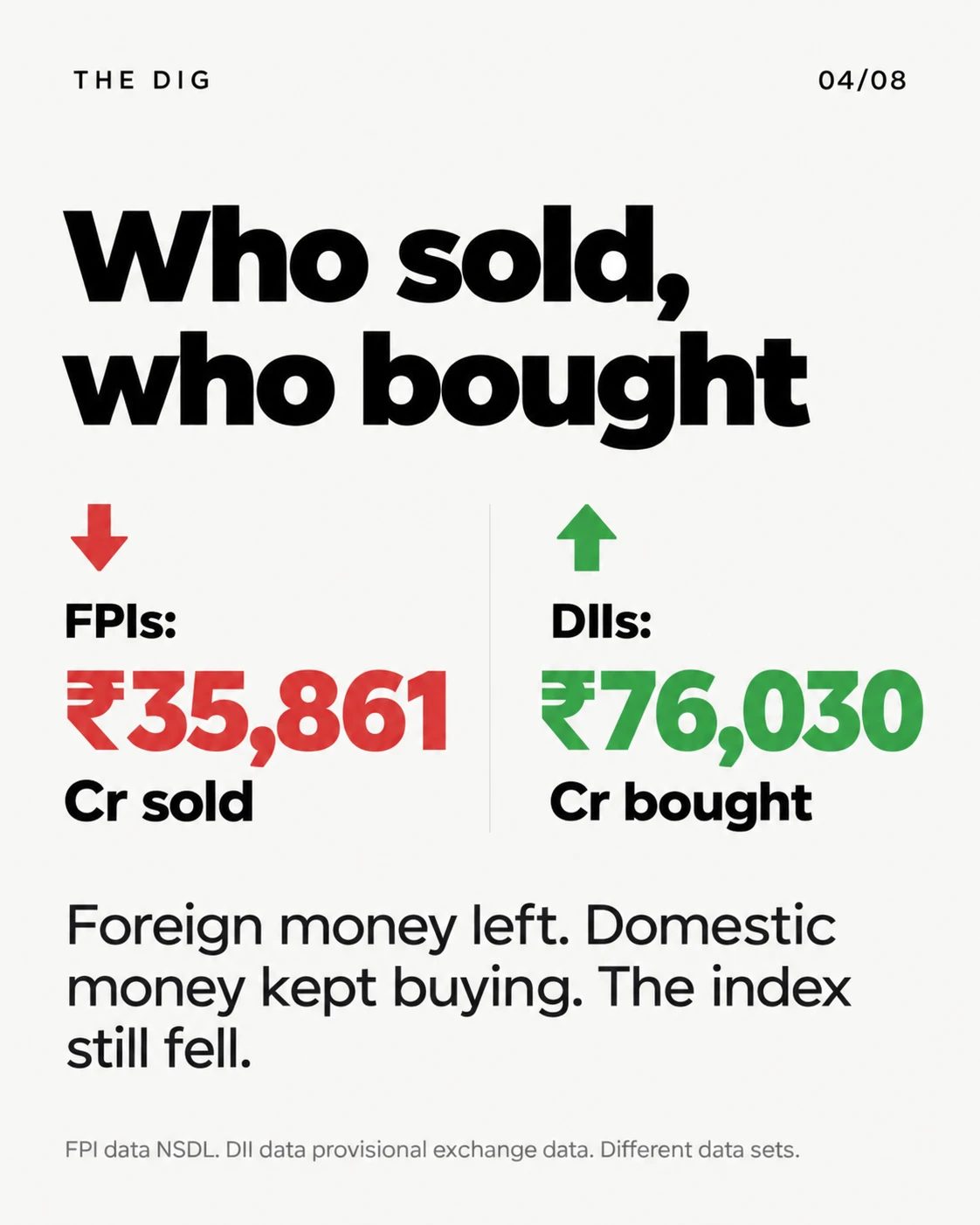
Foreign portfolio investors sold a net ₹35,861 crore of Indian equities in September, according to NSDL's fortnightly data. That undid roughly 72% of what they had invested in July and August combined. Most of the selling came in the second half of the month, after the Fed decision. Financial services saw the largest outflow at ₹13,147 crore. FPIs were still net buyers of healthcare and consumer services stocks, and they kept investing in new listings.
Domestic institutions bought a net ₹76,030 crore over the same month, based on provisional exchange data. The two numbers come from different data sets, so we would not subtract one from the other. Taken together, they show domestic institutions buying in size while foreign investors sold.
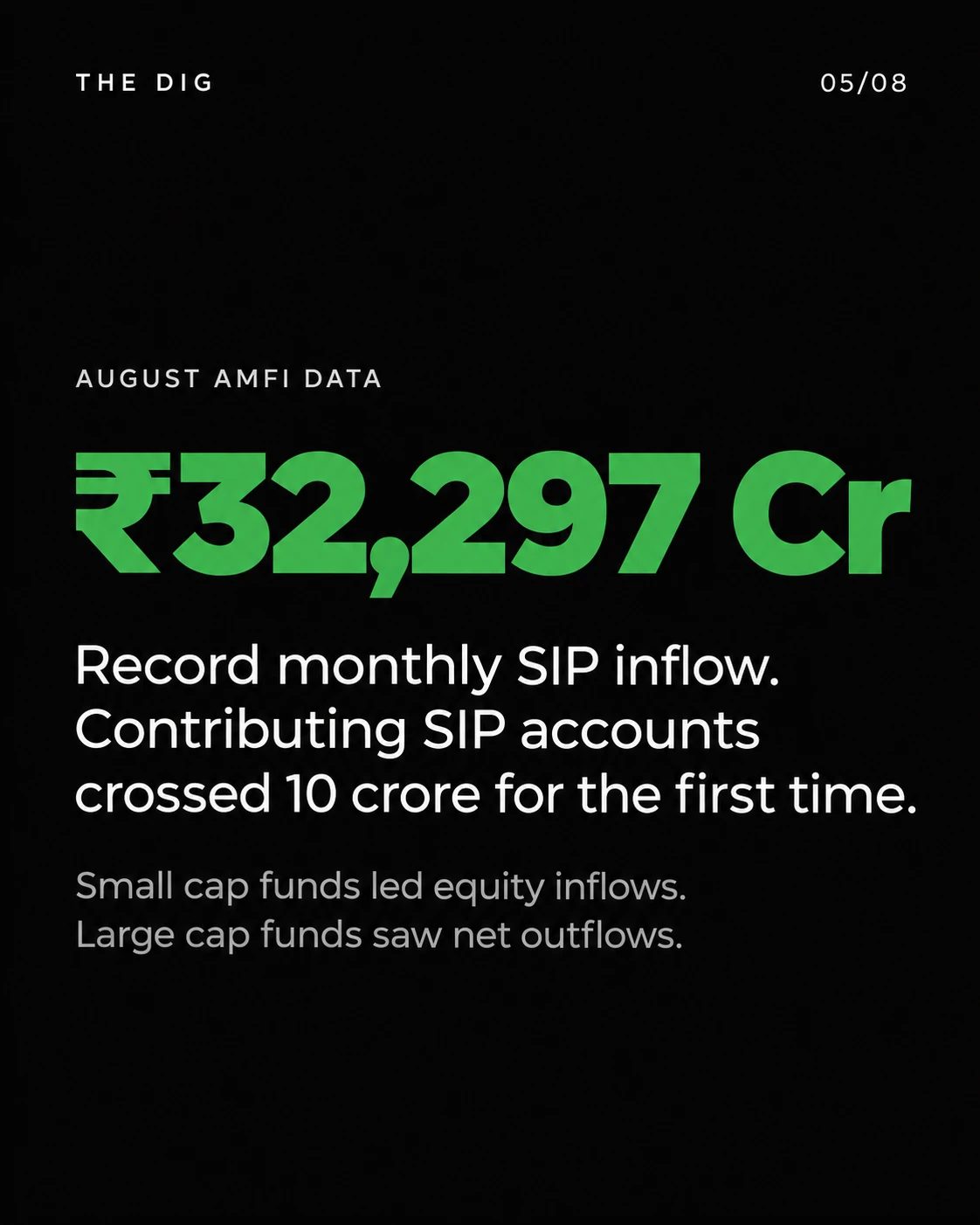
SIPs are a large part of that domestic money. AMFI's August data, released on 10 September, showed SIP contributions at a record ₹32,297 crore, and contributing SIP accounts crossed 10 crore for the first time. Equity schemes took in a net ₹29,329 crore. Small cap funds led with about ₹7,973 crore, while large cap funds saw net outflows of about ₹1,147 crore. Industry AUM ended August at ₹87.08 lakh crore.
India's own numbers
Gross GST collections for September were ₹2,03,521 crore, 14.7% higher than a year earlier. August collections had been just under ₹2 lakh crore, at ₹1,99,853 crore.
Retail inflation for August, published on 14 September, was 4.82%. With oil above $100 and the rupee weak, that number raised expectations of a rate hike at the RBI's October meeting.
Sectors and stocks
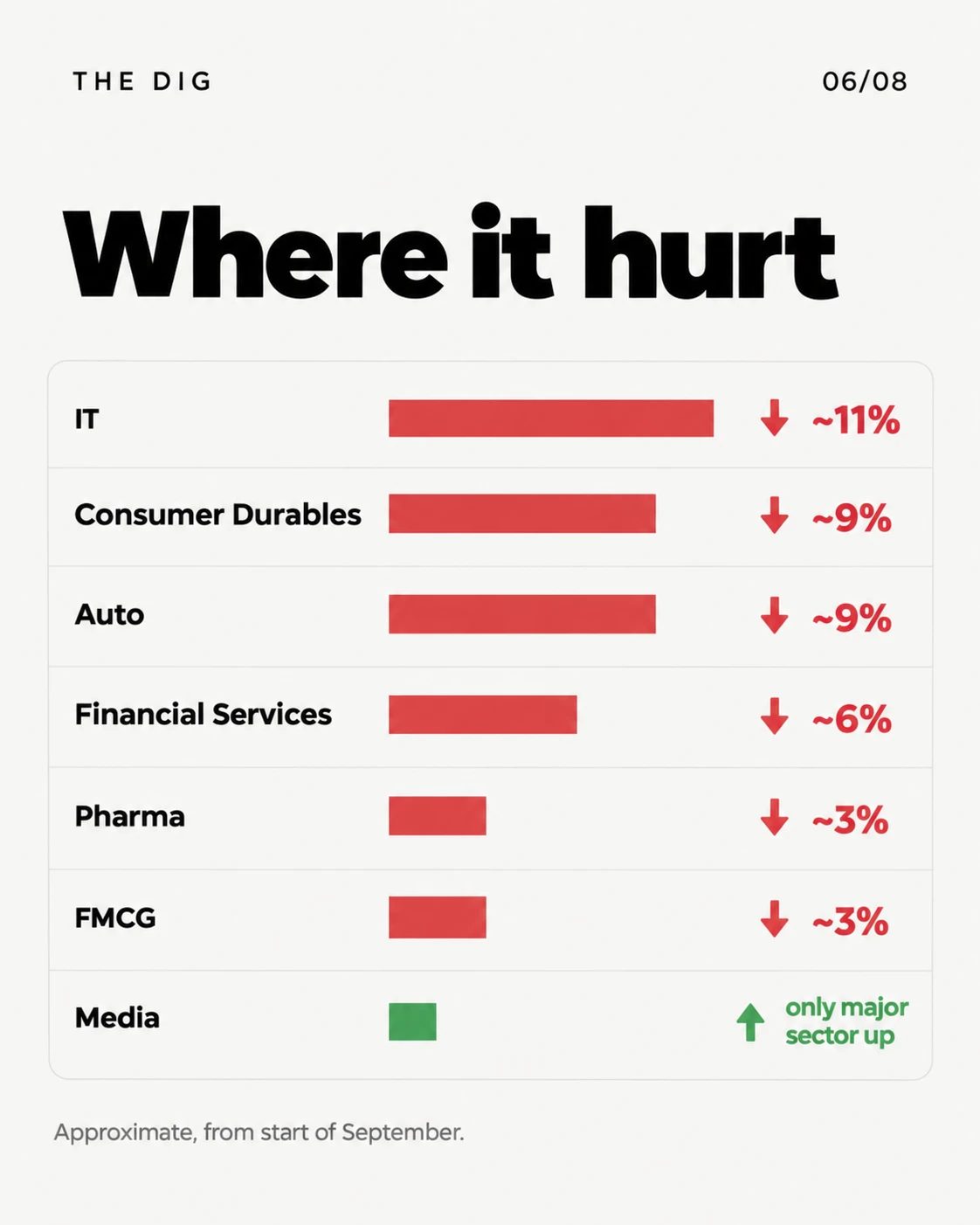
The sector figures in this section are approximate and run from the start of September.
IT fell the most, down about 11%, with TCS and Infosys both losing more than 10%. US clients make up the biggest share of the sector's revenue, and a Fed that is raising rates adds to worries about US growth. Consumer Durables and Auto each fell close to 9%. Maruti and Nestle were among the Nifty's larger decliners.
Financial services fell about 6%. Some of that came after 23 September, when IRDAI released a consultation paper proposing caps on insurance distribution commissions. Insurers and listed insurance distributors fell on the news, and Bajaj Finserv ended the month among the Nifty's biggest losers.
Pharma and FMCG fell about 3% each. Media was the only major sector index to close higher. Adani Ports, Dr Reddy's, Coal India and ITC were among the Nifty's gainers.
New listings continued despite the weak market. Close to 30 mainboard companies listed during the month, according to Chittorgarh. The National Stock Exchange closed its first trading day on 24 September 1.85% above its ₹1,785 issue price, and ESDS Software more than doubled on listing day. Some analysts said the volume of IPOs pulled money away from listed stocks.
What this means for distributors
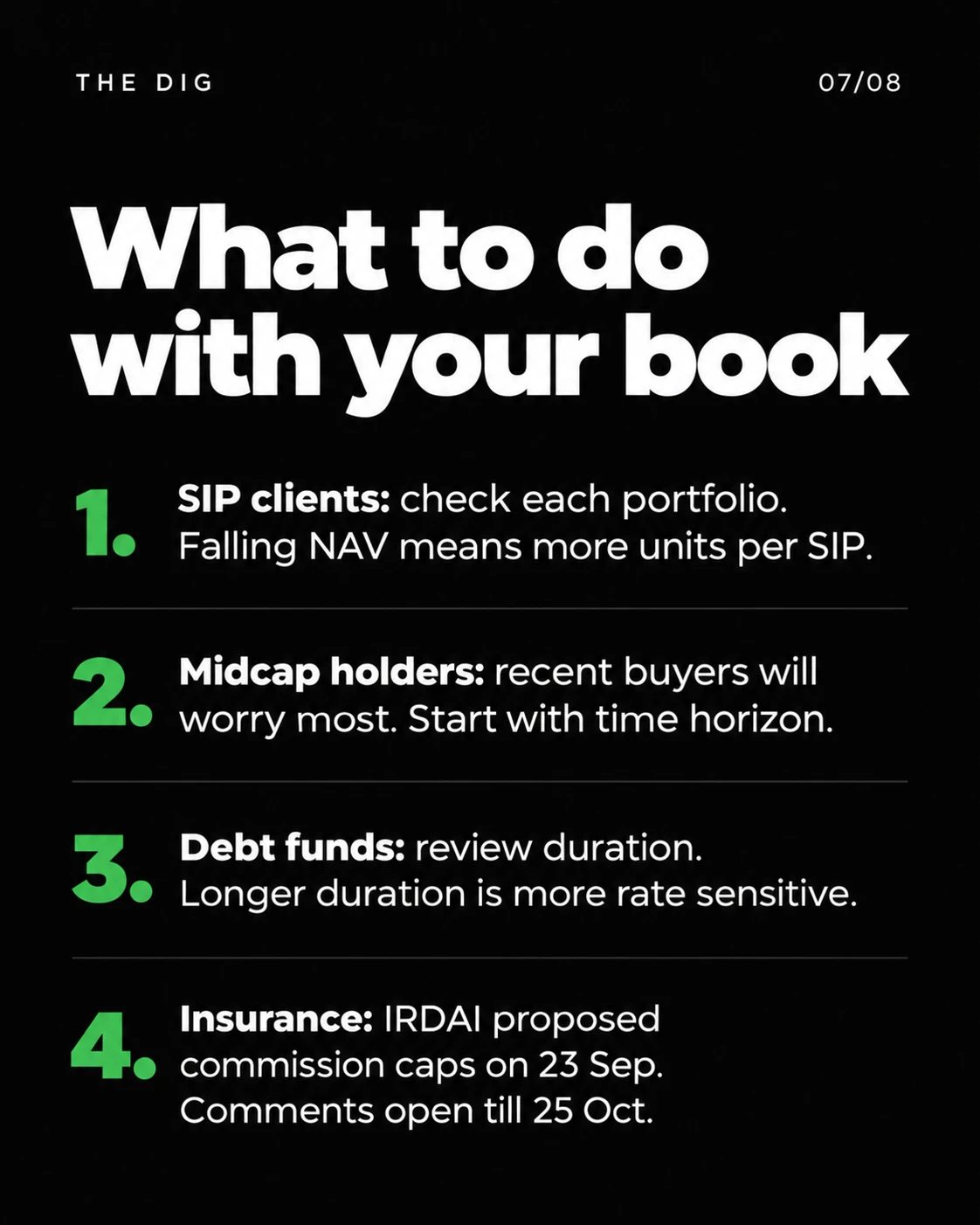
SIP clients. A fixed monthly SIP buys more units when a fund's NAV falls. Whether a client is actually below cost depends on the fund and the date they started, so we would check each portfolio before the conversation rather than talk about the index.
Midcap holders. The Midcap 100 lost 7.6% in a month after a long run of gains. Clients who added midcap exposure recently are the most likely to be worried. Their time horizon is where the conversation should start.
Debt funds. At the end of September, US yields were above 5%, FPIs had sold Indian bonds and inflation was rising. Longer duration funds lose more value when rates rise. Shorter duration funds are less sensitive to rates, but they still carry other risks such as credit.
Gold. Gold fell 4.8% in rupee terms while the Nifty fell 6.1%. A single month tells us little about gold's place in a portfolio, because its price also depends on the dollar, real interest rates and global demand.
Insurance. If you also sell insurance, read the IRDAI proposals. They would bring back commission caps that vary by product and by channel. Reported caps include 20% on first-time individual health policies sold by agents, and 25% in the first year for agents selling individual non-linked life policies with a premium-payment term of 10 years or more. Distribution entities would face lower caps. Payouts would shift towards renewals, and mis-selling could lead to commissions being clawed back. None of this is final, and comments are open until 25 October. We would estimate the effect on your insurance income now.
Update as of 9 October
Two things expected at the end of September have now happened. On 7 October the RBI raised the repo rate by 25 basis points to 5.50% in a unanimous vote and changed its stance to calibrated tightening. The 57th GST Council meeting, moved first from 12 September to 7 October, was then moved again to 8 October. We will cover the market fall of 7 October in a separate piece.
In short
Global factors drove Indian markets in September. The Fed raised rates, oil went above $100 and foreign investors sold close to ₹36,000 crore of equities. Domestic institutions and record SIP flows bought through the fall, but the Nifty still lost 6.1% and midcaps lost more. GST collections and SIP numbers stayed strong. Going into October, the questions were how the RBI would respond and whether oil would come down.
Sources: Federal Reserve FOMC statement (16 Sep 2026); RBI monetary policy statement (7 Oct 2026); AMFI monthly report, August 2026; PIB/MoSPI CPI release (14 Sep 2026); NSDL fortnightly sector-wise FPI data; NSE and BSE index data; NSE and BSE provisional FII/DII data; World Gold Council September commentary (gold, INR per 10g); Ministry of Finance GST data via Economic Times and Tata nexarc; Investing.com (November Brent futures); Reuters (Fed, weekly streak); Fortune India (NSE listing); IRDAI consultation paper (23 Sep 2026) and Moneycontrol (IRDAI proposals); Financial Express (GST Council date); NSE sector indices (approximate, start-of-September basis); Chittorgarh (IPO count). Market data as of 30 September 2026. Update section as of 9 October 2026. This is a market summary, not a fund suggestion. Mutual fund investments are subject to market risks.