
How INR Settlements Are Transforming Geopolitics, Macroeconomics, and Market Prospects
India’s recent push to settle more international trade transactions in the rupee (INR), rather than the US dollar or other foreign currencies, amid rising geopolitical tensions with the US, is reshaping its geopolitical stance. Macroeconomic fundamentals and the prospects for India’s domestic industries and mutual fund sectors are undergoing transformation. The Reserve Bank of India (RBI) has recently relaxed rules for Special Rupee Vostro Accounts (SRVA), which bridge settlements between India and its foreign trading partners by allowing foreign banks to hold INR balances with Indian banks. This eliminates the need for prior RBI approval and accelerates the onboarding process.
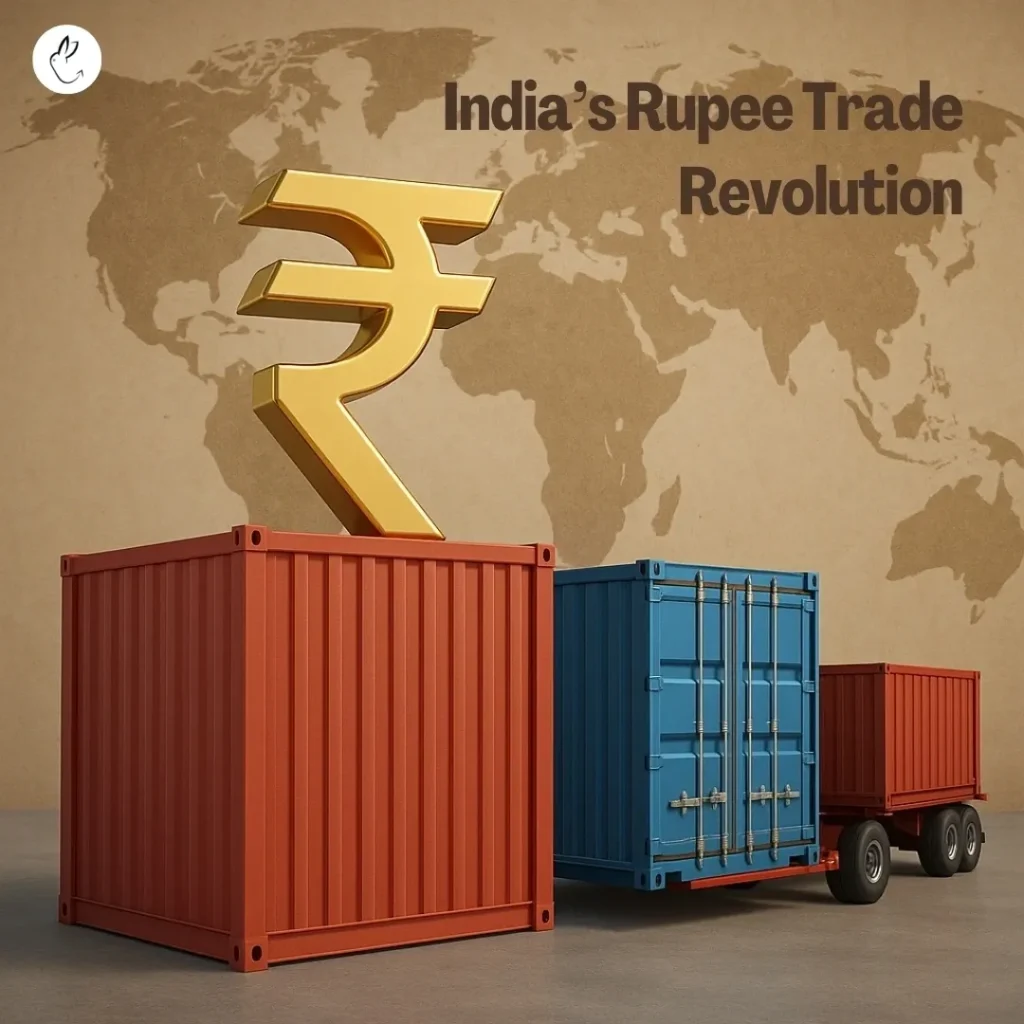
What Is Rupee Trade?
Rupee trade refers to India directly settling cross-border transactions, such as imports and exports, in its own currency, thereby eliminating the multi-step conversion typically required for dollar-denominated payments.
- With SRVA mechanisms, foreign exporters and importers transact in INR, reducing conversion costs and forex risks for Indian businesses.
- Countries like Russia, UAE, Sri Lanka, and Iran have already adopted this system, and recently, the RBI has issued a circular permitting BRICS and other nations to conduct rupee-dominated trade.
- This has led to easier, cheaper, and less risky international trades for Indian exporters and importers.
Geopolitical Significance
- Switching to a rupee-based trade system empowers India with greater autonomy and resilience against global shocks.
- This move may be seen as a direct counter to the US imposing tariffs up to 50% on Indian goods (as seen in August 2025), insulating India from dollar volatility and currency-based sanctions.
- It also deepens ties with nations transacting in rupees. It aligns India with the global shift toward multi-polar trade systems, particularly within BRICS, where local currency settlements are gaining momentum.
This strengthens India’s international influence as it pursues broader INR adoption and PM Modi’s Make India Great Again (MIGA) campaign.
Macroeconomic Impact
Trade Balance and GDP Growth
The shift to INR settlements presents significant macroeconomic benefits. Key benefits include:
- Reduced currency conversion costs and mitigation of forex volatility for exporters and importers. This improves cash flow management and competitiveness in the global market.
- By eliminating intermediaries and making transactions more direct, margins improve for export-driven sectors (IT, pharma, textiles, and agriculture).
- This cost efficiency could drive higher export growth, positively impacting GDP and helping sustain India’s robust annual GDP growth of 6% or more.
- Declining reliance on dollar liquidity reduces pressure on foreign reserves. At the beginning of August 2025, when the rupee hit 87.8 against the dollar, RBI intervened by using $9.3 billion in reserves to counter volatility (selling dollars in the market). Direct INR settlements help contain such risks.
Inflation and Monetary Policy
Rupee stability from these arrangements is crucial for import-heavy sectors, such as oil, gas, automobiles, and aviation.
Excessive rupee weakness fuels imported inflation and can prompt the RBI to raise rates. hurting debt markets. However, increased INR settlements reduce currency fluctuations, provide the RBI with more flexibility in monetary policy, and support both growth and price stability. As long as energy prices and food inflation remain contained, macroeconomic indicators remain stable.
Impact on Industry
Export-Driven Sectors
Industries such as IT, pharmaceuticals, textiles, agriculture, and gems benefit most from INR internationalisation, gaining margin stability, less FX risk, and improved predictability in cash flows. These sectors attract more global demand and investment, spurring job creation and a larger contribution to GDP. Direct rupee settlements result in higher profits by reducing conversion losses.
Import-Dependent Sectors
Sectors reliant on overseas goods and components, oil, auto, and aviation, face increased input costs and profit pressures if the rupee weakens. Companies with significant foreign debt also risk higher servicing costs, which can impact their balance sheets and overall profitability.
Thus, as demand for INR in trade grows, so does its stability. A stronger rupee means India has more bargaining power in everything from oil imports to technology licensing.
With respect to export-focused companies (such as IT and pharma), domestic mutual fund portfolios will generally outperform, as higher earnings uplift funds with such sectoral exposure.
Final Words…
India’s aggressive policy reforms, particularly the relaxation of SRVA rules, support the broader adoption of rupee trade and redefine the nation’s macroeconomic outlook. While rupee volatility amongst rising geopolitical tensions poses challenges for import-reliant industries and borrowers, exporters and the overall economy stand to gain from streamlined cross-border transactions and improved competitiveness.
If monetary authorities manage currency dynamics effectively, both domestic industries and mutual fund investors are well-positioned to benefit from these evolving trends, provided mutual fund distributors advise clients suitably.